
How to Choose a Dentist With Teeth Whitening Options
28 September 2026 | Cosmetic Dentistry, Melbourne Dentist, Teeth Whitening

Choosing a dentist with teeth whitening options is not just about finding the brightest shade on a treatment menu. A more useful starting point is choosing a clinic that checks your teeth, gums, fillings and the reason for discolouration before recommending any whitening product.
If you are comparing dental clinics in Melbourne CBD, look for a dentist who explains the available options, discusses likely limitations, checks whether whitening is suitable for your oral health and gives clear information about fees and aftercare. Whitening may help lighten natural tooth enamel for some people, but it is not suitable for every situation and results vary.
Why choose a dentist with teeth whitening options?
Teeth whitening uses bleaching agents, usually hydrogen peroxide or carbamide peroxide, to help lighten certain types of staining in natural tooth enamel. Stains can come from food, drinks, smoking, ageing, trauma, some medicines or changes inside the tooth.
A dental assessment matters because different causes of discolouration respond differently. Surface stains may improve with professional cleaning, while deeper discolouration may need another approach. Crowns, veneers, bridges and tooth-coloured fillings do not whiten in the same way as natural enamel, so they may look different after whitening.
A dentist can also check for issues that should be managed before whitening, such as tooth decay, gum inflammation, cracks, exposed root surfaces or sensitivity. Whitening over an untreated problem may irritate teeth or gums and may not address the reason your teeth look darker.
Start with registration, assessment and safety
A dentist with teeth whitening options should be a registered dental practitioner and should be willing to explain why a particular whitening method may or may not suit you. In Australia, you can check practitioner registration through the AHPRA public register.
The Australian Dental Association’s patient information on teeth whitening explains that whitening is not suitable for everyone and that professional advice is useful before treatment. This is especially relevant if you have sensitivity, gum disease, tooth decay, exposed roots or existing restorations.
All dental procedures and treatments carry potential risks and benefits. With whitening, possible side effects can include temporary tooth sensitivity and gum irritation. Your dentist should explain these possibilities, what to do if they occur and whether there are reasons to delay or avoid whitening.
What to look for when comparing clinics
A good whitening appointment should feel like a healthcare discussion, not a sales pitch. The dentist should ask about your concerns, examine your mouth, explain treatment choices and discuss realistic expectations without promising a specific shade change.
| What to check | Why it matters | A useful question to ask |
|---|---|---|
| Dental registration | Confirms the practitioner is registered to provide dental care in Australia | Are the clinicians registered with AHPRA? |
| Oral health assessment | Helps identify decay, gum issues, cracks or sensitivity before whitening | Do I need a check-up or clean before whitening? |
| Whitening options | Different methods suit different needs, budgets and oral health factors | What options may be appropriate for my teeth? |
| Clear risks and limits | Helps you make an informed decision | What are the possible side effects or limitations? |
| Transparent fees | Helps avoid confusion about what is included | What does the quoted fee include and exclude? |
How a dentist with teeth whitening options compares treatment types
There is no single whitening method that suits everyone. A dentist may discuss in-chair whitening, custom take-home whitening trays, a combination approach or whether whitening should wait until other dental concerns are managed.
In-chair whitening is performed at a dental clinic and may be considered when a person prefers supervised treatment in a clinical setting. If you are curious about the appointment process, Metro Dental has a guide on what to expect from in-chair teeth whitening.
Take-home whitening usually involves trays made to fit your teeth and whitening gel used as instructed. Over-the-counter whitening products are also available, but they may use different strengths, tray designs or application methods. A dental assessment can help you understand whether those products are suitable for your mouth.
| Whitening option | How it is usually used | Key consideration |
|---|---|---|
| In-chair whitening | Performed by a dental professional in a clinic | Requires assessment first and results vary |
| Custom take-home trays | Used at home according to dental instructions | Relies on correct use and tray fit |
| Combination approach | May involve clinic and home components | Not needed or suitable for every patient |
| Retail whitening products | Bought from shops or pharmacies | May not address dental disease or complex staining |
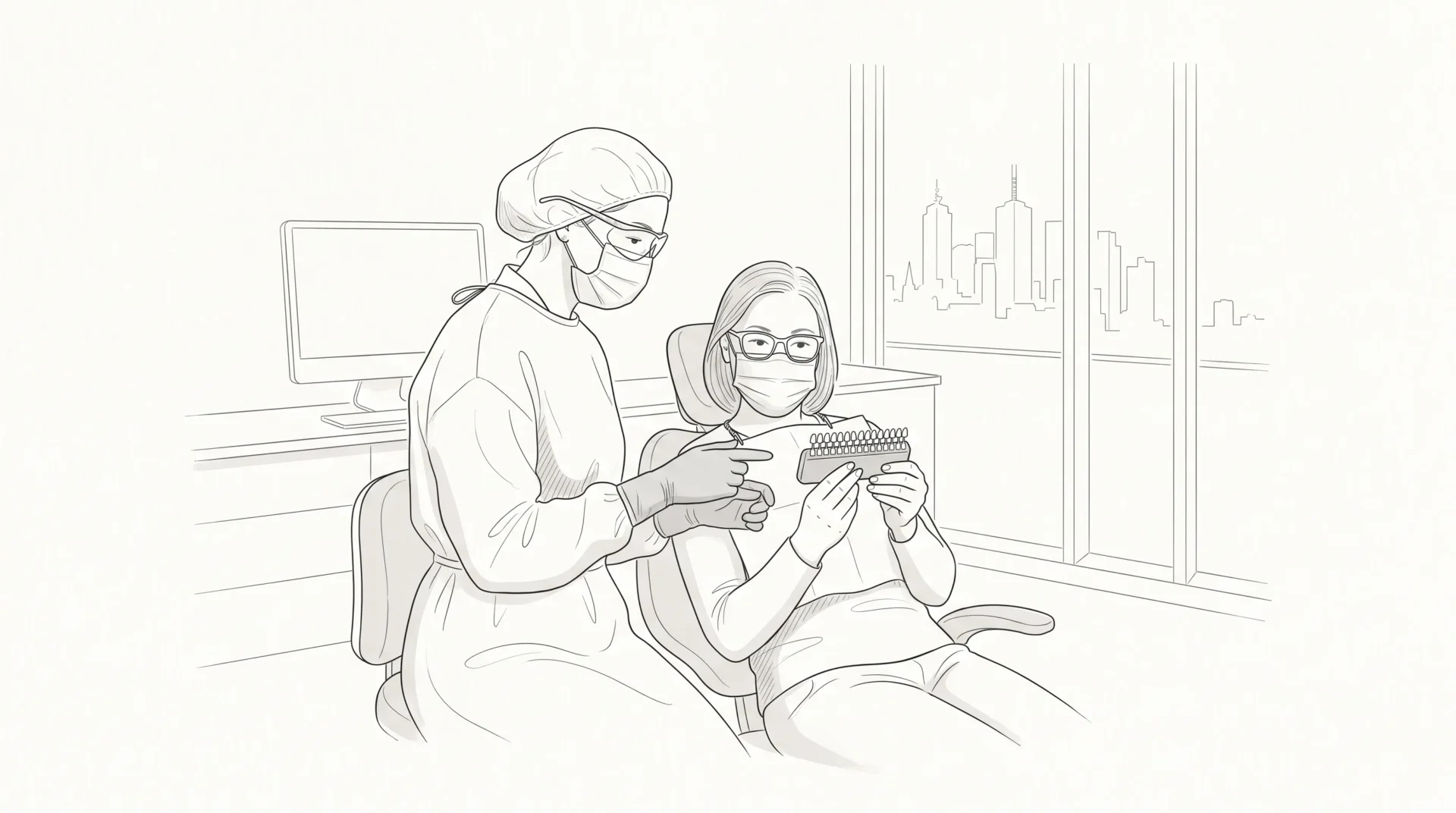
What should happen before whitening is recommended?
Before whitening, your dentist will usually want to understand what has changed, how long you have noticed the colour concern and whether you have symptoms such as sensitivity, pain, bleeding gums or a chipped tooth. These details can affect whether whitening is appropriate.
A consultation may include checking your gums, enamel, fillings, crowns, veneers and general oral health. The dentist may also talk through your current oral hygiene routine, diet, smoking history and previous whitening use. If plaque, tartar or surface staining is present, professional cleaning may be discussed before whitening.
If you want a more detailed overview, this article on what happens at a teeth whitening consultation explains the kinds of checks and conversations that may take place before a whitening plan is considered.
Questions to ask before booking
When you are comparing a dentist with teeth whitening options, clear questions can help you understand whether the clinic’s approach matches your needs. You do not need to know technical details in advance. A good appointment should leave room for discussion.
Useful questions include:
- Is whitening suitable for my teeth and gums at the moment?
- What type of staining do I appear to have?
- Will my crowns, veneers or fillings change colour?
- What side effects could occur, such as sensitivity or gum irritation?
- How should I care for my teeth after whitening?
- What is included in the fee?
- Are there alternatives if whitening is unlikely to achieve what I am hoping for?
If a dentist recommends another treatment first, such as a clean, filling or gum care, that should be explained in plain language. Whitening is an elective cosmetic treatment, so it should not be rushed without understanding oral health needs and possible alternatives.
Costs, payment information and what quotes should include
Whitening fees can vary depending on the method used, whether a check-up or clean is needed first, the products involved and whether custom trays are made. There is no single standard cost that applies to every patient.
A written or clearly explained quote should tell you what is included. For example, ask whether the fee includes the consultation, whitening materials, custom trays if relevant, review appointments or desensitising advice. If payment timing is a concern, ask the clinic what payment options are available.
Metro Dental’s article on professional teeth whitening costs in Melbourne outlines common factors that may influence pricing, without assuming that whitening is appropriate for every person.
Local convenience in Melbourne CBD
For people travelling from Southbank, Docklands, Carlton, East Melbourne or North Melbourne, choosing a dentist with teeth whitening options in the CBD may make appointments easier to fit around work, study or other commitments. Convenience matters because whitening may involve more than one appointment, especially if an assessment, clean, trays or review are recommended.
Metro Dental is located on Swanston Street in Melbourne CBD and provides general and cosmetic dental care, including teeth whitening, in a patient-focused setting. If you already see a dentist for check-ups, it can be helpful to keep whitening advice connected to your broader oral health history.
Local access should not be the only factor, though. The more important question is whether the clinic takes time to assess your teeth, explain choices, discuss risks and avoid making promises about results.
Signs to pause and ask more questions
A whitening provider may not be the right fit if the process skips an oral health assessment or if you feel pressured to decide quickly. Whitening should be considered after your teeth and gums have been checked, not treated as a one-size-fits-all product.
Consider asking for more information if you notice any of the following:
- A promise of a specific shade or identical result for everyone
- No discussion of sensitivity, gum irritation or restorations
- No check for decay, cracks or gum concerns before whitening
- Heavy reliance on appearance-focused claims without oral health advice
- Unclear fees or unclear instructions for home use
- Pressure to proceed before you understand the options
A careful dentist will not treat normal differences in tooth colour as a defect. They should help you understand what whitening may realistically do, what it cannot do and whether another dental option may be more appropriate.
Frequently Asked Questions
Is teeth whitening suitable for everyone? No. Whitening may not be suitable if you have untreated decay, gum disease, cracked teeth, significant sensitivity, exposed roots or certain types of restorations. A dental examination can help determine whether whitening may be appropriate.
Will whitening change the colour of crowns, veneers or fillings? Whitening products work on natural tooth enamel and do not whiten crowns, veneers, bridges or tooth-coloured fillings in the same way. This can affect the final appearance if restorations are visible when you speak or smile.
Do I need to see a dentist with teeth whitening options before using a home kit? It can be useful to have a dental assessment first, especially if you have sensitivity, restorations or have not had a recent check-up. Your dentist can explain whether a home kit is suitable and how to reduce avoidable irritation.
How long do whitening results last? This varies between patients. Diet, smoking, oral hygiene, enamel characteristics and ageing can all influence how long a lighter shade is maintained. Your dentist can explain aftercare and whether future maintenance may be suitable.
Can teeth whitening damage teeth? Whitening should be used carefully and according to professional advice. Incorrect use, unsuitable products or whitening over untreated dental problems may increase the chance of sensitivity or gum irritation. Your dentist can discuss risks based on your mouth.
Choosing with informed expectations
The right dentist with teeth whitening options will focus on assessment, clear advice and informed consent before discussing treatment. You should understand the likely benefits, possible side effects, limitations, costs and alternatives before deciding whether to proceed.
If you are considering teeth whitening in Melbourne CBD, a dental examination can help determine the cause of discolouration and which options may be appropriate. To discuss your concerns, you can contact Metro Dental to arrange an assessment on Swanston Street.
Disclaimer
The information provided on this website is for general informational and educational purposes only. It is not intended to replace professional dental advice, diagnosis or treatment. Dental needs and treatment outcomes vary between individuals. Always seek advice from a qualified dental practitioner regarding your specific circumstances before making decisions about your oral health or treatment. A consultation and clinical assessment are required to determine which treatment options may be suitable for you. All dental procedures carry potential risks and benefits, which will be discussed with you before treatment.