
Family Dental Services for Children, Adults and Older Patients
2 October 2026 | Children's Dentistry, General Dentistry, Oral Health

Family dental services cover preventive care, treatment for dental problems and advice suited to each person’s stage of life. Children may need support with brushing and developing teeth, adults may need care for decay or gum disease and older patients may need help with dry mouth or existing dental work. Age alone does not determine which treatment is appropriate.
Metro Dental on Swanston Street provides general, children’s, cosmetic and orthodontic dental care in Melbourne CBD. Each family member’s needs should be assessed separately, taking into account their oral health, medical history and preferences.
Understanding what different services involve can help you ask useful questions, weigh up treatment options and decide whether an appointment is needed.
What family dental services can include
Family dental care is not a standard package that everyone receives. An examination helps identify what needs attention, what can be monitored and whether any treatment is appropriate. Common areas of care include:
| Area of care | What it involves | Why it may be considered |
|---|---|---|
| Preventive care | Examinations, cleaning, brushing advice and selected fluoride treatments | To support oral health and manage individual risks |
| Restorative care | Fillings and other repairs to damaged teeth | To restore tooth structure or function where needed |
| Gum care | Assessment and treatment of the tissues supporting teeth | For bleeding, inflammation or other signs of gum disease |
| Orthodontic care | Assessment of tooth alignment and bite | When tooth position affects cleaning, function or appearance |
| Cosmetic care | Options such as whitening or veneers | For an appearance concern the patient chooses to discuss |
Appropriate family dental services distinguish between treatment needed for oral health and elective choices about appearance. You should receive an explanation of the expected benefits, limitations, risks and alternatives before deciding.
Children: prevention and treatment of decay
Early dental visits allow a dentist to check developing teeth and help parents with brushing, toothpaste and eating habits. A child’s first appointment may focus on becoming familiar with the setting and examining their mouth, depending on their age and comfort.
Baby teeth matter even though they eventually fall out. They support eating and speech and help maintain space for adult teeth. Decay in a baby tooth should therefore be assessed rather than assumed to be harmless.
Preventive options may include fluoride treatment or fissure sealants. Fluoride helps strengthen tooth enamel, the outer surface of a tooth. A sealant is a protective coating placed over selected grooves in a back tooth. Neither is automatically needed for every child; recommendations depend on factors such as decay risk and tooth development.
If decay is present, the options depend on its depth, symptoms and how long the tooth is expected to remain. Early changes may be managed with preventive measures and monitoring, while more extensive damage may need a filling or another treatment. Procedures can involve discomfort, sensitivity or further care, so parents should understand the proposed approach.
For children, family dental services should also include practical home-care advice. The Australian Dental Association’s oral health information for families provides guidance on age-appropriate brushing and fluoride toothpaste. Young children need an adult’s help with brushing rather than being expected to manage independently.
Teenagers and developing adult teeth
As adult teeth emerge, a dentist can assess alignment, cleaning difficulties and the way the teeth meet. An orthodontic assessment does not necessarily mean treatment needs to begin immediately.
Metro Dental offers orthodontic care, including Invisalign. Clear aligners are removable trays that gradually move teeth according to a treatment plan. They require consistent wear and careful cleaning and are not suitable for every bite or tooth-position concern. The dentist can explain available options, potential risks and whether referral is appropriate.
Adults: addressing symptoms and considering elective options
For adults, dental care often involves maintaining healthy teeth and gums while assessing concerns such as sensitivity, a broken filling or discomfort when chewing. Bleeding gums also deserve assessment, even if there is little pain.
Depending on the findings, family dental services may involve a filling, gum treatment or root canal treatment. A root canal treats the soft tissue inside a tooth when it is inflamed or infected. It may allow the tooth to be retained, but success is not guaranteed and additional restoration or further treatment may be needed. Extraction may be an alternative in some circumstances, with its own implications.
Cosmetic treatment is a separate choice, not a requirement for good oral health. Whitening may be considered for some types of discolouration, but it does not change the colour of existing fillings or crowns and can cause temporary sensitivity or gum irritation.
Veneers cover the front surface of teeth. Depending on the approach, they may involve irreversible removal of enamel and will need ongoing maintenance. They are not a necessary response to normal differences in tooth shape or colour.
Before cosmetic or orthodontic treatment, a dentist should assess the health of the teeth and gums. Existing decay or gum disease may need attention first, and choosing not to proceed with an elective treatment remains an option.
Older patients: maintaining comfort and function
Older patients may have natural teeth, extensive restorations, dentures or a combination of these. Dental care should focus on the person’s current needs rather than assuming tooth loss or major treatment is inevitable with age.
Dry mouth is one concern worth discussing. Some medicines and medical conditions reduce saliva, which can make eating uncomfortable and increase the risk of decay. Healthdirect’s guidance on dry mouth explains common causes and management options. Do not stop prescribed medicine without speaking with your doctor.
For older patients, family dental services may include reviewing existing fillings and crowns, assessing gum health and helping adapt daily cleaning. Reduced hand movement or vision can make brushing harder, so practical changes such as a different toothbrush handle or suitable cleaning aids may be useful.
Patients who wear dentures should mention looseness, sore areas or difficulty chewing. The dentist can assess the denture and the tissues underneath it, then discuss what care or referral may be needed. A mouth ulcer that does not heal within two weeks should also be checked.
Bring an up-to-date medicine list and details of significant health conditions. Medicines such as blood thinners can affect treatment planning, but changes should only be made on advice from the relevant treating clinician.
What an appointment may involve
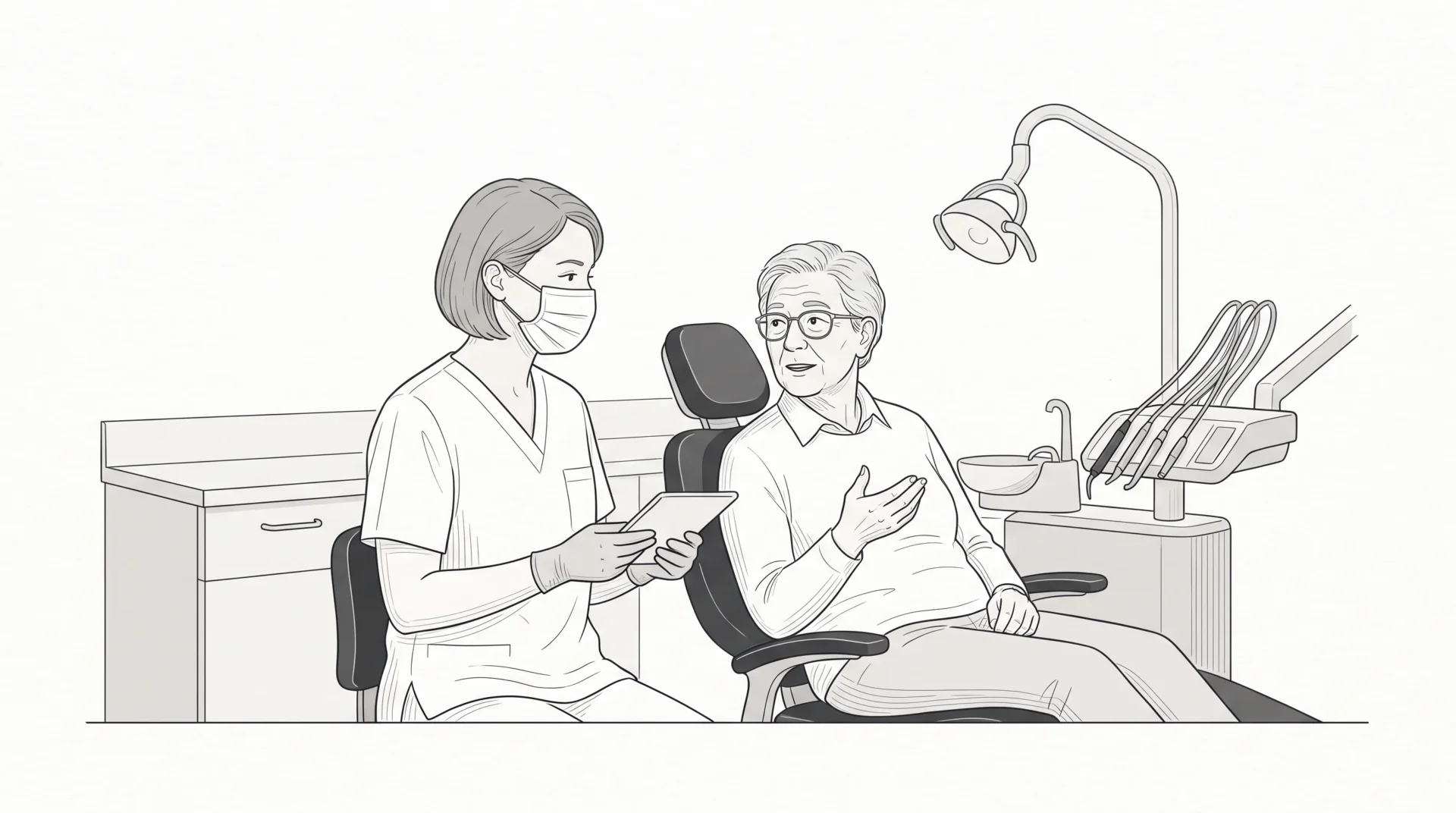
An appointment usually begins with a discussion of symptoms, medical history, medicines and any concerns about dental treatment. Tell the team if you feel anxious, have difficulty lying back or need communication support. For a child, it helps to explain what they already know about the visit and whether they have had a difficult dental experience.
During the examination, the dentist may check teeth, gums, existing dental work and the soft tissues of the mouth. X-rays may be recommended when they are clinically justified, rather than automatically at every visit.
A useful part of family dental services is understanding the findings before making a decision. Ask which issues need treatment, which can be monitored and what may happen if treatment is delayed. A treatment plan should explain likely costs, alternatives and any uncertainty about the outcome.
If anxiety is a concern, Metro Dental’s explanation of gentle dental care outlines the role of communication, consent and comfort measures. Gentle care does not mean every procedure is free of discomfort or risk.
You can also review how to prepare for your dental appointment to organise relevant information beforehand. Adults should be involved in decisions about their own care, including when a family member or carer accompanies them.
Costs, children’s benefits and payment arrangements
Dental costs depend on the examination findings, treatment complexity and the number of appointments involved. Ask for an estimate before agreeing to treatment and clarify whether further costs could arise if the plan changes.
Metro Dental offers payment plans and bulk-billed children’s dental care for eligible patients. When arranging family dental services, confirm which treatments are covered, any out-of-pocket costs and the terms of a proposed payment plan. Payment arrangements should support an informed decision, not replace a discussion about whether treatment is needed.
The Australian Government’s Child Dental Benefits Schedule helps cover selected basic dental services for eligible children. Eligibility includes age, Medicare and qualifying government-payment requirements. Benefits are subject to a cap over a two-calendar-year period, and not every dental service is covered.
Before treatment, ask the clinic to confirm eligibility, the available benefit balance and whether the proposed services can be bulk billed. For adults, private health insurance benefits vary by policy. Having cover does not necessarily mean the full fee will be paid.
When a family member needs prompt assessment
A persistent toothache, broken tooth, increasing swelling or injury should be discussed with a dentist promptly. A knocked-out adult tooth needs urgent dental attention; a baby tooth should not be put back into its socket.
Facial swelling with fever or feeling unwell requires urgent assessment. Call 000 if swelling is causing difficulty breathing or swallowing.
Less urgent concerns, including recurring sensitivity, bleeding gums or changes in denture fit, still warrant an appointment. These symptoms can have different causes and cannot be reliably diagnosed from an article or photograph alone.
Frequently asked questions
Does everyone in the family need the same check-up schedule? No. The interval depends on each person’s oral health, decay and gum disease risk, medical circumstances and current treatment. Metro Dental’s guide to how often to visit a dentist in Melbourne explains why recall intervals can differ.
Can children and adults attend the same dental clinic? A clinic offering children’s and adult dentistry can assess different family members. Ask about appointment availability and any individual needs when booking. Some conditions may require referral to another practitioner.
Are dental visits still needed if someone has no natural teeth? Dental assessment can still be useful for checking dentures, comfort and the tissues of the mouth. The appropriate review interval depends on the individual, rather than a fixed schedule for everyone.
Do family dental services include cosmetic treatment? They may, and Metro Dental offers cosmetic care. However, whitening, veneers and other elective options are not essential for every patient. Suitability requires an assessment and a discussion of risks, maintenance, costs and alternatives, including no treatment.
Discuss your family’s dental needs
If you are choosing care for a child, yourself or an older family member, start with the concerns that matter to that person. Mention symptoms, previous treatment experiences and any practical or financial considerations when arranging the visit.
To discuss these needs, you can book an appointment with Metro Dental in Melbourne CBD. An examination can help determine which options are appropriate and what can be monitored without treatment.
Disclaimer
The information provided on this website is for general informational and educational purposes only. It is not intended to replace professional dental advice, diagnosis or treatment. Dental needs and treatment outcomes vary between individuals. Always seek advice from a qualified dental practitioner regarding your specific circumstances before making decisions about your oral health or treatment. A consultation and clinical assessment are required to determine which treatment options may be suitable for you. All dental procedures carry potential risks and benefits, which will be discussed with you before treatment.