
How to Choose a Dentist for Family Dental Needs
22 October 2026 | Children's Dentistry, General Dentistry, Melbourne Dentist
Choosing a dentist for family dental needs means finding care that suits each person, not simply booking everyone at the same clinic. Look for a practice that welcomes your children’s age groups, explains treatment choices clearly and discusses costs before you agree to care. Location and appointment availability matter too, especially when you are coordinating school, work and caring responsibilities.
One practice may suit your whole household, but it is also reasonable for different family members to see different clinicians. The aim is appropriate, comfortable care rather than keeping every appointment under one roof.
Is a family dentist different from a general dentist?
“Family dentist” usually describes a general dentist or practice that sees patients across different age groups. It is not a separate recognised dental specialty in Australia.
General dentists provide examinations, preventive advice and treatment for common dental concerns. The ages they see and the procedures they provide can vary, so check rather than assuming a family label means every service is available.
Some children or adults may need referral to a specialist because of their clinical needs, medical history or the complexity of treatment. A willingness to discuss referral is useful, not a shortcoming.
You can check a practitioner’s registration through Ahpra’s register of practitioners. Registration is a starting point; communication, age suitability and practical arrangements also matter.
What should you ask a dentist for family dental needs?
Check whether the practice suits your children’s ages and needs
Ask whether the clinic regularly sees children in your child’s age group and how it approaches an unfamiliar first visit. A toddler, a school-aged child and a teenager may need different explanations and appointment arrangements.
If your child has sensory sensitivities, disability, communication differences or a difficult previous dental experience, describe what may make attendance easier. Ask what adjustments the practice can offer rather than assuming particular facilities or support are available.
A useful answer should explain the approach without promising that every child will tolerate an examination immediately. Sometimes an initial visit focuses on familiarisation and assessing what is manageable.
For a broader view of changing needs, Metro Dental’s guide to planning family dental care for different ages explains why care should be tailored rather than based on age alone.
Look for communication that respects the whole household
When comparing a dentist for family appointments, notice whether the practice asks about each person’s concerns rather than treating the household as one booking.
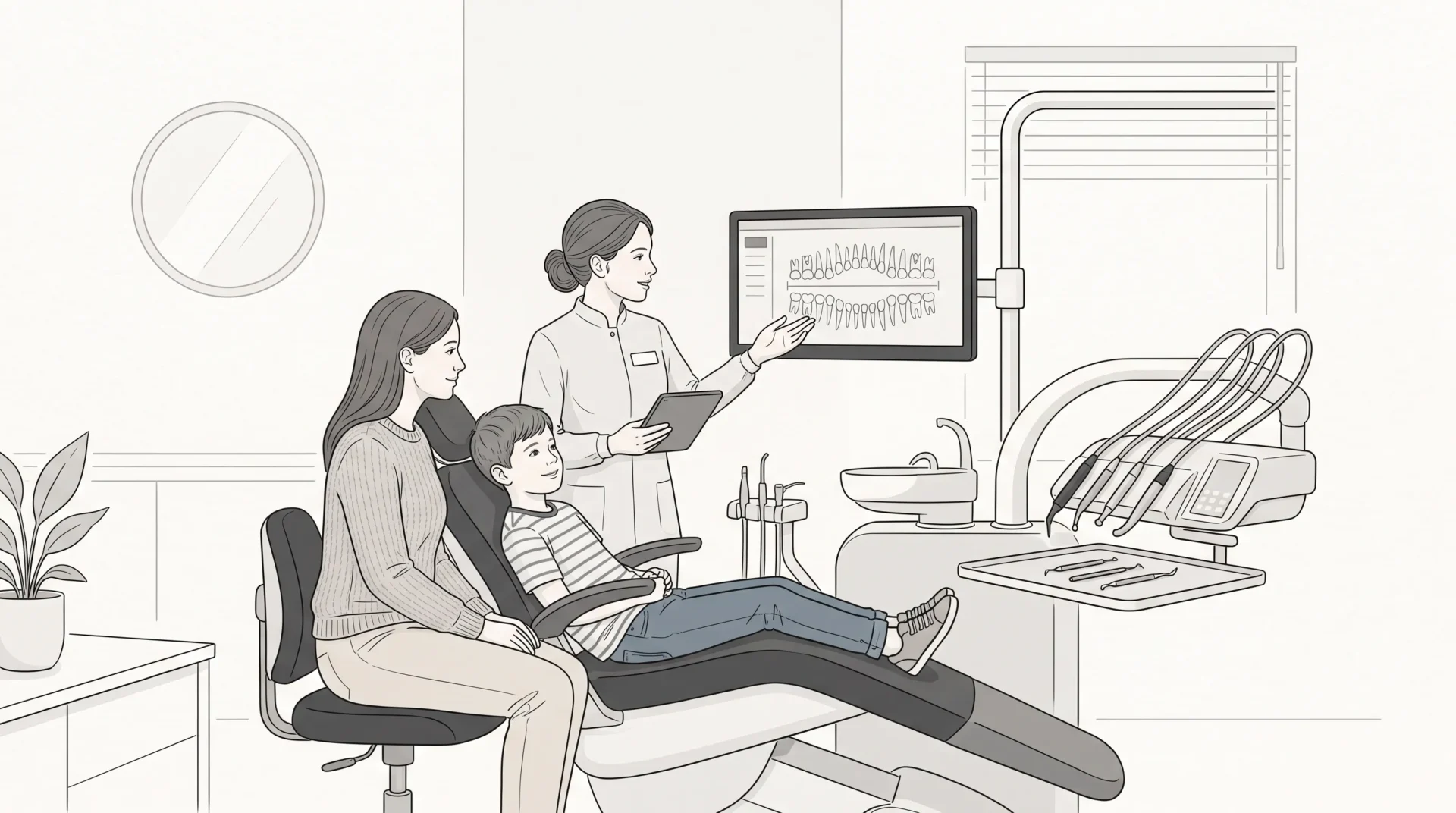
Children should receive explanations they can understand. Adults should have room to discuss discomfort, dental anxiety, previous experiences or financial limits without feeling judged. Someone who has not attended for several years should be able to start with their current concerns.
Ask whether you can agree on a pause signal and discuss the appointment before treatment begins. These measures may make communication easier, although they cannot guarantee a particular experience.
Metro Dental’s advice on planning comfortable dental care includes practical ways to raise anxiety, sensitivity and communication preferences before a visit.
Ask how recommendations and consent are handled
A dentist should explain what they have found, why treatment may be recommended and what reasonable alternatives exist. Depending on the finding, options might include preventive care, monitoring, treatment or referral.
Ask about likely benefits, relevant risks, costs and what may happen if you defer treatment. You should also understand whether a recommendation addresses disease, function or an optional cosmetic preference. Normal differences in tooth appearance do not automatically require treatment.
A dentist for family care should still treat each person as an individual. Adults make their own treatment decisions, and sharing information with relatives generally requires appropriate permission.
For children and teenagers, ask how the practice manages consent, privacy and communication when different parents or carers attend. Let the clinic know about any relevant care arrangements before the appointment.
Compare practical arrangements, not just the service list
A long list of treatments does not necessarily make a clinic the right fit. Consider how care would work during an ordinary week and whether the arrangements remain manageable if someone needs follow-up visits.
For households considering a Melbourne CBD practice, compare the journey from home, school and work. A Swanston Street location may be convenient for a city worker, but another family member may need extra travel time or assistance getting to the clinic.
Use these questions to check details that are easy to overlook:
| Practical factor | What to ask |
|---|---|
| Appointment coordination | Can family appointments be arranged close together when suitable? |
| Continuity | Can we request the same dentist, and what happens if they are unavailable? |
| Accessibility | Is there step-free access, and can you accommodate our mobility or communication needs? |
| Unexpected problems | How are urgent concerns assessed, and what should we do outside opening hours? |
| Referrals and records | How are records shared with another treating practitioner when authorised? |
These are questions to confirm with any practice, not features to assume. Availability may also differ between a routine examination and a longer treatment appointment.
Understand fees, benefits and public dental options
Ask for costs that relate to the proposed care
Request the expected fee for the first appointment and ask what it includes. Examinations, cleaning and X-rays may be charged separately. X-rays should be recommended according to clinical need, not simply because everyone in the household is attending.
Before agreeing to further treatment, ask for an itemised estimate and an explanation of priorities. If several treatments are recommended, discuss which need earlier attention and whether other care can reasonably be staged.
When choosing a dentist for family care, compare clarity about fees as well as the quoted amount. A lower initial price may cover different services, so check that you are comparing like with like.
If you have private health insurance, confirm benefits, exclusions and waiting periods with your insurer. Payment plans can spread costs but may have fees, eligibility requirements or other conditions; check the full terms before agreeing.
Check children’s benefits and Victorian public care eligibility
The Child Dental Benefits Schedule helps eligible children access specified basic dental services, subject to a benefit limit. Eligibility depends on factors including Medicare enrolment, age and receipt of a qualifying government payment by the child or family.
It does not cover every service. For example, orthodontic and cosmetic dental treatment are excluded. Ask the clinic to check eligibility, the remaining balance and whether proposed services will be bulk billed before treatment begins.
Medicare generally does not cover routine private dental care for adults. If affordability is a concern, check Victoria’s public dental care information for eligibility and access arrangements. Fees, waiting times and priority criteria can apply.
Use the first appointment to assess the fit
You do not need to commit the whole household to ongoing care before anyone has attended. One initial appointment can help you assess communication, understand recommendations and decide whether the approach suits your needs.
Bring an up-to-date medication list and relevant medical information. Tell the clinic about symptoms, previous dental difficulties and recent X-rays or records that may be available from another provider. Existing records can be useful, although the dentist may still need further information.
An appointment may involve discussing concerns, examining the teeth and gums and considering whether additional tests are needed. Treatment is not automatically required at that visit.
A dentist for family dental needs should explain why follow-up is recommended for each person. Recall intervals should reflect individual oral health and risk rather than assuming everyone needs the same schedule.
Afterwards, consider whether you understood the findings, had your questions answered and felt able to make a decision without pressure.
Frequently asked questions
Does everyone in the family need to see the same dentist? No. Using one practice may simplify appointments and records, but individual preferences and clinical needs come first. Some households use different dentists within one clinic, while others attend separate practices. Records can be shared between treating practitioners with appropriate authorisation.
Is a family dentist better than a general dentist? The terms often overlap. Rather than choosing by the label, check whether the dentist sees the relevant age groups, provides appropriate care and explains when specialist input may be needed. Neither label alone tells you whether a practice will suit your household.
Can children get free dental care in Australia? Some eligible children can receive covered services without an out-of-pocket cost through bulk billing under the Child Dental Benefits Schedule. Public dental services also have eligibility rules. Neither pathway means every child receives every treatment free, so confirm coverage before care begins.
What if our family cannot afford all the recommended treatment? Tell the dentist before agreeing to a plan. Ask them to explain clinical priorities, reasonable alternatives and whether treatment can be staged. You can also check public dental eligibility and any available payment arrangements. Do not assume that deferring all care is the only option.
Discuss your household’s needs with Metro Dental
Metro Dental is located on Swanston Street in Melbourne CBD and offers general dentistry, children’s dentistry, cosmetic treatments and orthodontic care. Payment plans are available, and eligible children may access bulk-billed dental care under the applicable benefit arrangements.
If you are looking for a dentist for family care, you can contact Metro Dental or use its online appointment booking to discuss who needs an appointment and any access, comfort or cost concerns. An assessment can clarify each person’s needs and the available options before you decide on treatment.
Disclaimer
The information provided on this website is for general informational and educational purposes only. It is not intended to replace professional dental advice, diagnosis or treatment. Dental needs and treatment outcomes vary between individuals. Always seek advice from a qualified dental practitioner regarding your specific circumstances before making decisions about your oral health or treatment. A consultation and clinical assessment are required to determine which treatment options may be suitable for you. All dental procedures carry potential risks and benefits, which will be discussed with you before treatment.