
What Happens During a Professional Teeth Cleaning?
2 September 2026 | General Dentistry, Preventative Dentistry, Teeth Cleaning

If you have searched for nearby teeth cleaning because your teeth feel rough, your gums bleed when brushing or you are due for routine care, a professional clean is a straightforward preventive appointment. It usually involves checking your teeth and gums, removing plaque and tartar, polishing the teeth and discussing simple ways to care for your mouth at home.
A professional teeth cleaning is often called a scale and clean. It is different from brushing at home because dental instruments can remove hardened deposits that a toothbrush and floss cannot usually remove. Your dentist can also look for signs of tooth decay, gum inflammation, enamel wear and other concerns that may need a separate assessment.
What is professional teeth cleaning?
Professional teeth cleaning is a dental procedure where a dentist, dental hygienist or oral health therapist removes plaque and tartar from the teeth and around the gumline.
Plaque is a soft, sticky film that forms on teeth. It contains bacteria and can contribute to tooth decay and gum inflammation if it is not cleaned away regularly. Tartar, also called calculus, is hardened plaque. Once plaque hardens into tartar, it usually needs to be removed with professional dental instruments.
A clean may be part of a routine dental visit or recommended as part of gum care. If your appointment also includes an examination, your dentist may assess your teeth, gums, jaw, soft tissues and bite. If you would like more detail about the examination side of the visit, Metro Dental has a separate guide on what Australian patients can expect from a dental check-up.
What happens during a professional teeth cleaning appointment?
The exact process can vary depending on your oral health, your symptoms and whether you are attending for routine preventive care or a specific concern. In general, a professional teeth cleaning appointment may include the following stages.
| Stage | What may happen | Why it is done |
|---|---|---|
| Medical and dental history | Your dental team may ask about your health, medications, allergies, pregnancy, previous dental treatment and any current concerns. | Some health conditions and medicines can affect dental care, bleeding, healing or sensitivity. |
| Oral assessment | Your teeth, gums and soft tissues may be checked. Gum measurements or X-rays may be recommended if clinically indicated. | This helps identify decay, gum inflammation, tartar build-up and other issues before or during cleaning. |
| Scaling | Plaque and tartar are removed using hand instruments, an ultrasonic scaler or both. | This removes hardened deposits from the tooth surfaces and gumline. |
| Polishing | A polishing paste may be used to smooth tooth surfaces and remove some surface staining. | Polishing can leave the teeth feeling smoother, although it does not change the natural tooth colour like whitening treatment may. |
| Fluoride or preventive advice | Fluoride may be recommended for some patients. Your dental team may also discuss brushing, flossing, diet and risk factors. | Preventive care can help support enamel and reduce future plaque build-up when combined with daily home care. |
| Next steps | If concerns are found, your dentist can explain whether monitoring, further cleaning, fillings, gum care or another option may be appropriate. | Treatment decisions should be based on your individual assessment, needs and preferences. |
Step 1: Your dental team checks your history and concerns
Before cleaning begins, you may be asked about your oral health and general health. This is not just paperwork. Information such as medications, bleeding conditions, diabetes, pregnancy, reflux, smoking or previous dental anxiety may influence how care is planned.
You can also mention what prompted the appointment. For example, you may have noticed bleeding when brushing, bad breath, sensitivity to cold drinks, a rough feeling behind the lower front teeth or staining around certain teeth. These details help your dentist decide what to check more closely.
If you feel nervous, have a strong gag reflex or have had a difficult dental experience before, it is reasonable to say so at the start. The appointment can often be paced in a way that helps you feel more settled, although individual experiences vary.
Step 2: Your teeth and gums are examined
A dental clean is often paired with an oral examination, although this depends on the type of appointment you book. Your dentist may check for plaque, tartar, tooth decay, gum inflammation, worn fillings, cracked teeth, signs of grinding or soft tissue changes.
Gum health is an important part of this assessment. Your dentist may gently measure the space between the gum and tooth, called the gum pocket, in selected areas or throughout the mouth. Deeper pockets, bleeding or gum recession may suggest gum disease or the need for more detailed gum care.
Dental X-rays are not always needed at every cleaning appointment. They may be discussed if your dentist needs more information about areas between teeth, under existing fillings, bone support or symptoms that cannot be assessed fully by looking in the mouth.
Step 3: Plaque and tartar are removed
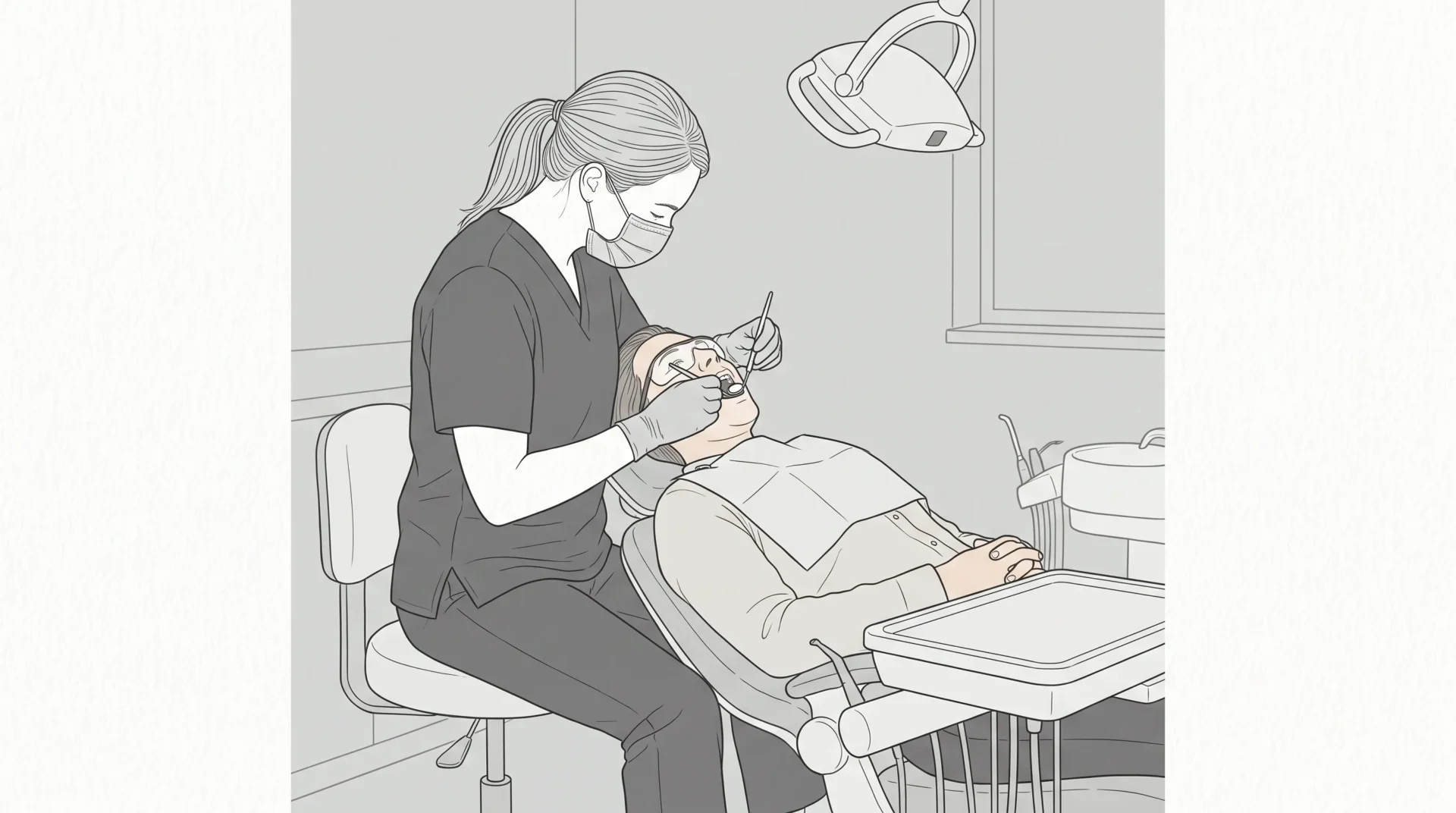
Scaling is the part of the appointment most people associate with a professional teeth cleaning. Your dental practitioner may use hand scalers, an ultrasonic scaler or a combination of both.
An ultrasonic scaler uses vibration and water to loosen tartar from the tooth surface. You may hear a high-pitched sound and feel water spray, vibration or pressure. Hand scalers are small instruments used to carefully remove deposits from specific areas.
Some areas may feel more sensitive than others, especially if there is gum inflammation, exposed root surface, heavy tartar or existing tooth sensitivity. If you need a pause, you can let your dental team know. Local anaesthetic is not usually required for a routine clean, but it may be considered in some circumstances, such as deeper gum treatment or significant sensitivity.
A useful comparison is regular home maintenance. Day-to-day cleaning is different from a larger home renovation project that deals with deeper repairs or structural changes. In the same way, brushing and flossing are everyday care, while professional scaling removes hardened deposits that home tools generally cannot manage.
Step 4: The teeth may be polished
After scaling, your teeth may be polished with a soft rubber cup or brush and a gritty polishing paste. This can help remove some surface stains caused by foods, drinks or tobacco and may make the teeth feel smoother.
Polishing is not the same as teeth whitening. A professional clean can remove external deposits and some surface staining, but it does not bleach the tooth structure or guarantee a whiter shade. If tooth colour is a separate concern, your dentist can explain whether whitening or another cosmetic option may be suitable after assessing your oral health.
Step 5: Fluoride or preventive care may be discussed
Your dentist may recommend fluoride treatment for some patients, depending on decay risk, sensitivity, enamel strength and other factors. Fluoride is a mineral used in dentistry to support enamel and help reduce the risk of tooth decay when used appropriately.
You may also receive advice about home care. The Australian Dental Association’s consumer information site, Teeth.org.au, provides patient-friendly guidance on brushing, flossing and oral health basics. Your dentist can tailor advice to your mouth, especially if you have crowded teeth, braces, aligners, implants, crowns, bridges or areas that are difficult to clean.
Does professional teeth cleaning hurt?
Many people describe a routine clean as mildly uncomfortable rather than painful, but experiences differ. You may feel pressure, vibration, scraping sensations or cold water. If your gums are inflamed, they may bleed slightly during the clean and feel tender afterwards.
Temporary sensitivity can happen, particularly when tartar has been covering areas near the gumline. This usually settles, but you should contact your dentist if discomfort is significant, worsening or not improving as expected.
It is worth telling your dentist if you have sensitive teeth before the clean begins. They may be able to adjust the approach, take breaks or discuss ways to reduce sensitivity after the appointment.
How long does a professional clean take?
The time needed depends on the amount of plaque and tartar, gum health, sensitivity, staining, whether X-rays or an examination are included and whether it is your first visit to the clinic.
A routine clean may be relatively short, while heavier tartar build-up or gum disease may require a longer appointment or more than one visit. If deeper gum treatment is recommended, your dentist should explain why, what it involves, possible risks and costs before you decide whether to proceed.
Is a professional clean the same as gum disease treatment?
Not always. A routine scale and clean focuses on removing plaque and tartar from visible tooth surfaces and around the gumline. If gum disease is present, you may need a more detailed assessment and a different cleaning approach.
Gum disease can range from gingivitis, which is inflammation of the gums, to periodontitis, where the supporting structures around the teeth are affected. Periodontitis may require deeper cleaning below the gumline, ongoing monitoring and sometimes referral or additional treatment. Your dentist can assess your gums and explain what may be appropriate for your circumstances.
How often should you have professional teeth cleaning?
There is no single schedule that suits everyone. Some people may be advised to attend every six months, while others may need more frequent or less frequent care depending on their risk factors.
Factors that can influence timing include:
- How quickly plaque and tartar build up
- Gum health and history of gum disease
- Tooth decay risk
- Smoking or vaping
- Dry mouth
- Diabetes or other relevant medical conditions
- Orthodontic appliances such as braces or clear aligners
- Crowded teeth or areas that are hard to clean
Your dentist can recommend a review interval after assessing your mouth. This advice should be individual rather than based only on a standard timeframe.
Finding nearby teeth cleaning in Melbourne CBD
If you work, study or live around Melbourne CBD, booking a dental clean close to your usual routine can make preventive care easier to fit into your day. Metro Dental is located on Swanston Street in Melbourne CBD and provides general dental care, including professional teeth cleaning, examinations and preventive advice.
Patients from areas such as Southbank, Carlton, Docklands, East Melbourne and North Melbourne may also look for a CBD clinic because it is convenient before work, during a lunch break or after appointments in the city.
If you are comparing options, consider whether the clinic offers the type of care you need, communicates clearly about fees and treatment options and can explain the benefits, limitations and alternatives of any recommended treatment. Metro Dental has a helpful overview of what services you can expect at a dental clinic if you are unsure how preventive care fits with other dental services.
How to prepare for a professional teeth cleaning appointment
You do not usually need to do anything complicated before a dental clean. Brushing as normal is enough. It can help to bring a list of your medications, details of any allergies and information about recent health changes.
If you have symptoms, try to describe them clearly. For example, note where sensitivity occurs, whether bleeding happens when brushing or flossing and whether discomfort is triggered by cold, pressure or chewing. If you are attending Metro Dental for the first time or it has been a while since your last visit, the guide on how to prepare for your dental appointment covers practical steps that may make the visit easier.
What should you do after a professional clean?
After a routine clean, you can usually return to normal activities. Your mouth may feel fresher or smoother, but some gum tenderness or mild sensitivity can occur. If fluoride has been applied, your dental team may give you specific instructions about eating or drinking afterwards.
At home, keep brushing twice a day with fluoride toothpaste unless your dentist advises otherwise. Cleaning between the teeth with floss or interdental brushes can also help reduce plaque where a toothbrush cannot reach well. Your dentist can show you which option may suit your teeth and gums.
Professional cleaning works best as part of ongoing preventive care. It does not replace daily brushing, cleaning between teeth or a balanced approach to diet and oral health habits.
When should you see a dentist sooner?
A routine clean can be planned at a convenient time, but some symptoms should be assessed sooner rather than waiting for your next scheduled appointment. Contact a dentist if you have persistent toothache, facial swelling, pus, a loose adult tooth, bleeding that does not settle, trauma to the mouth or pain that affects eating or sleeping.
These symptoms do not always mean something serious is happening, but they may need prompt assessment to identify the cause and discuss appropriate options.
Frequently Asked Questions
Can a professional teeth cleaning remove all stains? A clean may remove some surface stains from plaque, tartar, coffee, tea or tobacco. It will not change the natural internal colour of the teeth in the same way as whitening treatment. Your dentist can assess the type of staining and explain suitable options.
Will my gums bleed during a clean? Gums may bleed if they are inflamed, if tartar is present around the gumline or if gum disease is present. Bleeding during cleaning does not automatically mean a serious problem, but it is a sign your gums should be assessed.
Can I have teeth cleaning if I have sensitive teeth? Many people with sensitive teeth can still have professional cleaning, but your dentist should know before treatment begins. They may adjust the cleaning approach and discuss options to help manage sensitivity.
Is professional teeth cleaning safe during pregnancy? Dental care, including preventive care, may be appropriate during pregnancy, but you should tell your dentist that you are pregnant and mention any medical advice you have received. Your dentist can consider your individual health and timing.
Do children need professional teeth cleaning? Some children may benefit from professional cleaning, depending on plaque levels, diet, brushing ability, orthodontic appliances and decay risk. A dentist can assess whether a clean is needed and provide age-appropriate preventive advice.
Can teeth cleaning fix bad breath? A professional clean may help if bad breath is related to plaque, tartar or gum inflammation. Bad breath can also have other causes, including dry mouth, diet, medical conditions or infections, so persistent symptoms should be assessed.
Considering a professional teeth cleaning in Melbourne CBD?
A dental examination and professional clean can help assess your oral health, remove plaque and tartar and identify whether any further care may be appropriate. The right timing and approach depend on your teeth, gums, medical history and individual needs.
To discuss preventive dental care or book an appointment in Melbourne CBD, you can contact the team at Metro Dental. Your dentist can assess your mouth and explain the potential benefits, risks and alternatives before any treatment is recommended.
Disclaimer
The information provided on this website is for general informational and educational purposes only. It is not intended to replace professional dental advice, diagnosis or treatment. Dental needs and treatment outcomes vary between individuals. Always seek advice from a qualified dental practitioner regarding your specific circumstances before making decisions about your oral health or treatment. A consultation and clinical assessment are required to determine which treatment options may be suitable for you. All dental procedures carry potential risks and benefits, which will be discussed with you before treatment.