
Can Dental Bonding Be Completed in One Appointment?
31 August 2026 | Cosmetic Dentistry, General Dentistry, Melbourne Dentist

If you are searching for same day dental bonding near me, the short answer is: dental bonding can often be completed in one appointment, especially for small chips, minor gaps or localised shape changes. However, it is not always suitable to start and finish on the same day. A dentist needs to examine the tooth, check your bite, look for decay or cracks and understand what you would like to change before recommending treatment.
For people working, studying or living around Melbourne CBD, Southbank, Carlton, Docklands, East Melbourne or North Melbourne, the appeal of a single visit is understandable. Dental bonding is usually less complex than some other cosmetic treatments, but it still needs careful planning so the result fits your tooth structure, oral health and longer term needs.
Looking for same day dental bonding near me in Melbourne CBD?
A search for same day bonding usually means you want a practical answer quickly: can a chipped, worn or uneven tooth be repaired without several appointments?
In many simple cases, dental bonding may be completed in one visit after an assessment. This depends on factors such as the size of the area being restored, whether the tooth is healthy, whether your gums are stable and whether your bite places heavy pressure on the area.
If the tooth has pain, swelling, deep decay, a large fracture or signs of infection, bonding may not be the right first step. In those cases, your dentist may need to investigate the underlying issue before considering any cosmetic repair.
Metro Dental is located on Swanston Street in Melbourne CBD and provides general and cosmetic dental care. If you are considering bonding, an appointment can help clarify whether it may be suitable or whether another option should be discussed.
What dental bonding involves
Dental bonding is a cosmetic or restorative procedure where a dentist applies tooth-coloured composite resin to a tooth. Composite resin is also commonly used for tooth-coloured fillings. It can be shaped, set with a curing light and polished so it blends with the surrounding tooth as closely as practical.
Bonding may be considered for:
- Small chips on front teeth
- Minor uneven edges
- Small spaces between teeth
- Localised discolouration that does not respond well to whitening
- Slight changes to tooth shape or length
- Replacement or repair of some older small composite restorations
The aim is not to create the same result for every person. Your tooth colour, enamel thickness, bite, gum position and oral health all influence what is possible. A clinical assessment is needed before a dentist can explain whether bonding is appropriate for your circumstances.
If you are unsure where bonding fits among other dental options, Metro Dental has a helpful overview of general, cosmetic and orthodontic dental services and how these categories can overlap.
When dental bonding can often be completed in one appointment
One appointment bonding is more likely to be possible when the concern is simple, the tooth is otherwise healthy and the dentist can achieve a suitable result using composite resin alone.
For example, a small chip on the edge of a front tooth may be suitable for bonding if there is no deeper crack, nerve involvement or bite issue. A minor gap may also be suitable in some cases, provided the planned shape will not make the tooth too wide or difficult to clean.
A same day approach may be realistic when:
- The area is small or moderate in size
- There is no active toothache, swelling or infection
- The gum tissue around the tooth is healthy enough for treatment
- The tooth has enough enamel or structure for bonding
- The bite does not place excessive force on the proposed restoration
- You have realistic expectations about colour matching, strength and future maintenance
Good planning matters even when the actual treatment is relatively quick.
What happens during a one appointment bonding visit
A bonding appointment usually starts with a discussion about what you have noticed and what you would like to improve. Your dentist may ask whether the tooth has been chipped recently, whether you have sensitivity, whether you grind or clench and whether you have had previous dental work in the area.
The dentist will then examine the tooth and surrounding gums. In some cases, X-rays may be recommended to check for decay, cracks or other concerns that cannot be seen by looking alone. Healthdirect's general information on dental care explains that dental visits can include checks for tooth, gum and mouth problems, not only treatment of visible concerns.
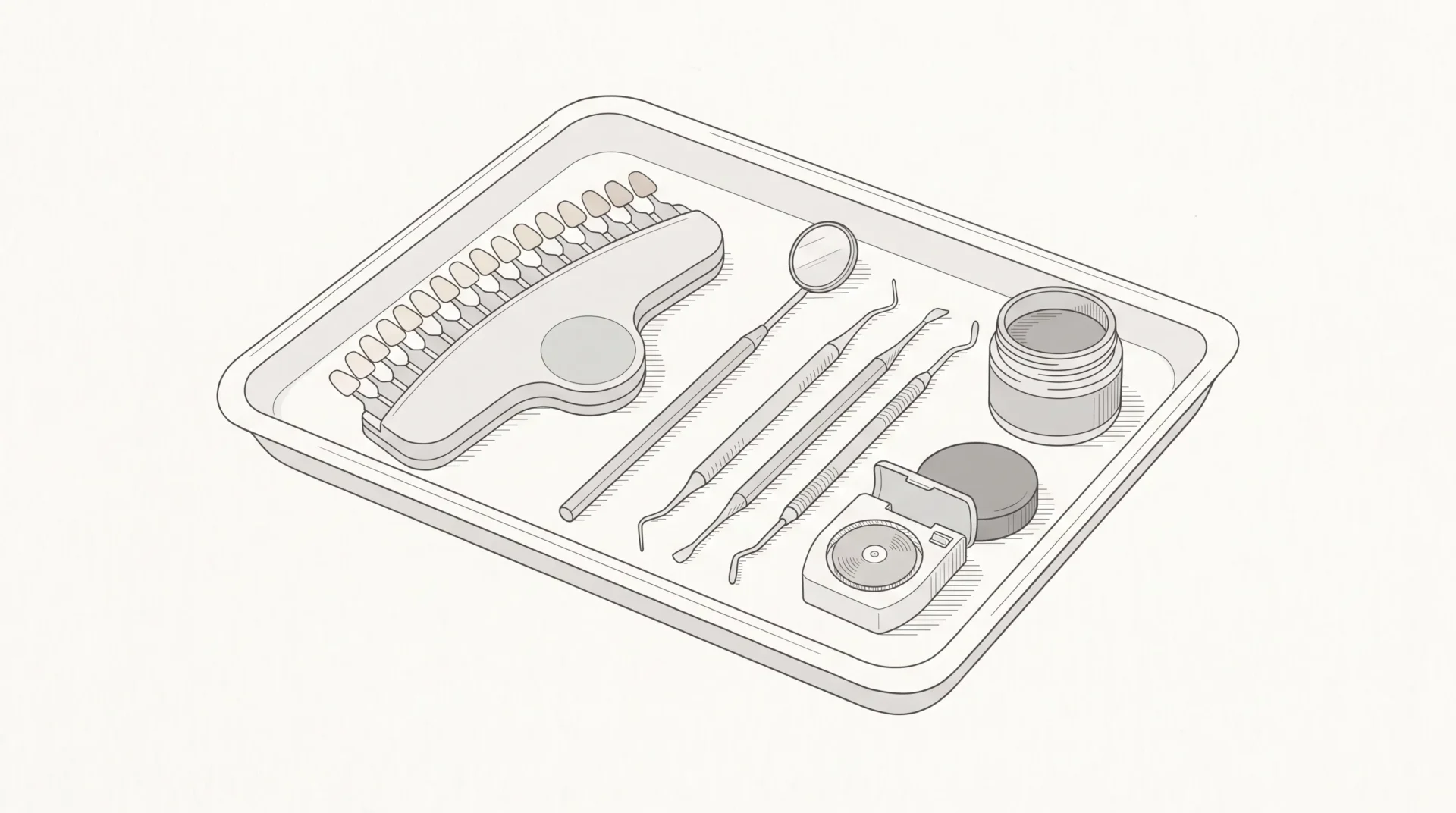
If bonding appears suitable and there is enough time set aside, the treatment may involve the following stages:
| Stage | What it usually involves | Why it matters |
|---|---|---|
| Shade selection | The dentist chooses a composite shade to blend with your tooth | Composite resin does not whiten later like natural enamel |
| Tooth preparation | The surface may be cleaned and lightly conditioned | This helps the bonding material attach to the tooth |
| Resin placement | Composite resin is applied in small amounts and shaped | The dentist can build the contour gradually |
| Curing | A dental light is used to set the resin | This hardens the material before final shaping |
| Finishing and polishing | The bonded area is adjusted and polished | This helps with comfort, appearance and cleaning |
Local anaesthetic is not always needed for minor cosmetic bonding, especially when little or no drilling is required. Some patients may still need anaesthetic depending on sensitivity, the depth of the repair or whether older filling material is being replaced.
When bonding may need more than one appointment
Dental bonding is not always a same day procedure. Sometimes the safest and most appropriate approach is to assess first, plan treatment and return for bonding later.
More than one appointment may be recommended if you need gum treatment, decay removal, tooth whitening before shade matching or a more detailed cosmetic plan involving several teeth. Whitening is worth mentioning because composite resin does not change colour with whitening products once it has been placed. If you are considering whitening, your dentist may discuss doing this before bonding so the shade can be planned more carefully.
Bonding may also be delayed or reconsidered when there is a deeper structural problem. A tooth with a large fracture, heavy wear, significant decay or signs of nerve involvement may require a different type of care. Depending on the diagnosis, options could include a filling, crown, root canal treatment, orthodontic care or monitoring.
If the concern relates to crowding, gaps or bite position, orthodontic options may need to be discussed. For some patients, tooth movement may be more appropriate than adding resin to change the appearance of the teeth. If you have noticed shifting, crowding or bite changes, you may find Metro Dental's guide on when to see a dentist about braces or Invisalign useful before booking an orthodontic assessment.
Benefits, limitations and risks of dental bonding
Dental bonding can be a conservative option because it may require little alteration to the natural tooth in suitable cases. It is often completed more quickly than laboratory-made restorations such as veneers or crowns. It can also be repaired or adjusted in some situations.
The limitations are just as important. Composite resin is not as strong as natural tooth enamel or some ceramic materials. It can stain, chip, wear or separate from the tooth over time. The colour match may be close but not identical, particularly if the tooth has complex translucency, existing restorations or deep discolouration.
All dental procedures carry potential benefits and risks. With bonding, possible issues include:
- Sensitivity after treatment
- Roughness that needs adjustment
- Chipping or wear under biting forces
- Staining around the bonded area
- Gum irritation if the shape makes cleaning difficult
- The need for repair, replacement or alternative treatment later
These risks do not mean bonding should be avoided in all cases. They mean the decision should be based on your oral health, bite, expectations and the dentist's assessment.
Dental bonding compared with other options
Dental bonding is only one way to address changes in tooth shape, colour or minor damage. A dentist may discuss other options depending on what they find during your examination.
| Option | May be considered for | Possible limitations |
|---|---|---|
| Dental bonding | Small chips, minor gaps, slight shape changes or localised cosmetic concerns | May stain, chip or need maintenance over time |
| Enamel reshaping | Very small uneven edges where enough enamel is present | Only suitable for minor changes and removes a small amount of enamel |
| Teeth whitening | General tooth colour changes where teeth and gums are suitable | Does not change the colour of fillings, crowns, veneers or bonding |
| Veneers | More planned changes to the visible front surface of teeth | May involve tooth preparation and is not suitable for every patient |
| Crowns | Teeth with more substantial structural weakness or existing damage | Usually involves more tooth preparation than bonding |
| Orthodontic treatment | Crowding, spacing or bite concerns | Takes longer and suitability depends on tooth, gum and bite health |
The right option depends on the cause of the concern. A small chip is assessed differently from tooth wear caused by grinding, a gap related to tooth position or discolouration related to an older filling.
How to prepare for a bonding assessment
You do not need to know which treatment you want before seeing a dentist. It can be enough to explain what bothers you, how long it has been present and whether anything has changed recently.
Before your appointment, it may help to note:
- When you first noticed the chip, gap, stain or uneven edge
- Whether the tooth is sensitive to cold, heat or biting
- Whether the tooth has been repaired before
- Whether you grind or clench your teeth
- Whether you are considering whitening now or later
- What outcome you would consider acceptable, including any concerns about cost, maintenance or treatment time
If you have a busy CBD schedule, it is reasonable to ask whether assessment and bonding could be done on the same day. The answer may depend on appointment length, the number of teeth involved and whether further checks are needed.
For a broader checklist, Metro Dental's article on how to prepare for your dental appointment explains what information to bring and when to mention medical conditions, anxiety or recent symptoms.
Caring for bonded teeth after treatment
If bonding is completed, your dentist will give advice based on the tooth and the location of the restoration. General care usually focuses on protecting the bonded area from unnecessary force and keeping the tooth easy to clean.
You may be advised to avoid biting hard objects with the bonded tooth, such as ice, pens or fingernails. If you play contact sport, a mouthguard may be recommended. If you grind or clench your teeth, your dentist may discuss whether a protective splint is appropriate.
Staining can occur over time, especially around margins where the bonding meets the tooth. Regular brushing, flossing and routine dental checks can help monitor the bonded area. If roughness, a sharp edge or a bite change develops, arrange a dental review rather than trying to adjust it yourself.
Frequently asked questions
Can dental bonding really be done in one appointment? Yes, it can sometimes be completed in one appointment, particularly for small and straightforward cosmetic repairs. A dentist still needs to assess the tooth first to check whether bonding is suitable and whether any underlying issue needs attention.
Is bonding suitable for a chipped front tooth? It may be suitable for some small chips on front teeth, depending on the size and position of the chip, the health of the tooth and your bite. Larger fractures, cracks or painful teeth may need further investigation before treatment is recommended.
Will dental bonding feel uncomfortable? Experiences vary. Minor bonding may involve little or no drilling, but some people have sensitivity or need local anaesthetic depending on the tooth and the procedure. Your dentist can explain what is expected for your situation.
How long does dental bonding last? Longevity varies between patients. It depends on the size and location of the bonding, your bite, oral hygiene, diet, grinding habits and whether the bonded area is exposed to staining or heavy forces. Composite resin may need repair or replacement over time.
Should I whiten my teeth before bonding? If you are planning to whiten your teeth, discuss this before bonding. Composite resin does not whiten in the same way as natural enamel, so the shade may need to be planned after whitening is completed and the colour has stabilised.
Is dental bonding better than veneers? Not necessarily. Bonding and veneers are different options with different benefits, limitations and levels of tooth preparation. Your dentist can compare them after assessing your teeth, gums, bite and treatment goals.
Speak with a dentist about your options
Dental bonding may be completed in one appointment for some patients, but suitability depends on the tooth, the reason for treatment and your overall oral health. A dental examination can help determine whether bonding, another cosmetic option or a general dental treatment may be more appropriate.
If you are in Melbourne CBD and want to discuss a chipped, uneven or discoloured tooth, you can book an appointment with Metro Dental on Swanston Street. Your dentist can assess your oral health and explain the potential benefits, risks, limitations and alternatives before you decide whether to proceed.
Disclaimer
The information provided on this website is for general informational and educational purposes only. It is not intended to replace professional dental advice, diagnosis or treatment. Dental needs and treatment outcomes vary between individuals. Always seek advice from a qualified dental practitioner regarding your specific circumstances before making decisions about your oral health or treatment. A consultation and clinical assessment are required to determine which treatment options may be suitable for you. All dental procedures carry potential risks and benefits, which will be discussed with you before treatment.