
Invisalign vs Braces: Which Is Right for Your Smile?
12 August 2026 | News
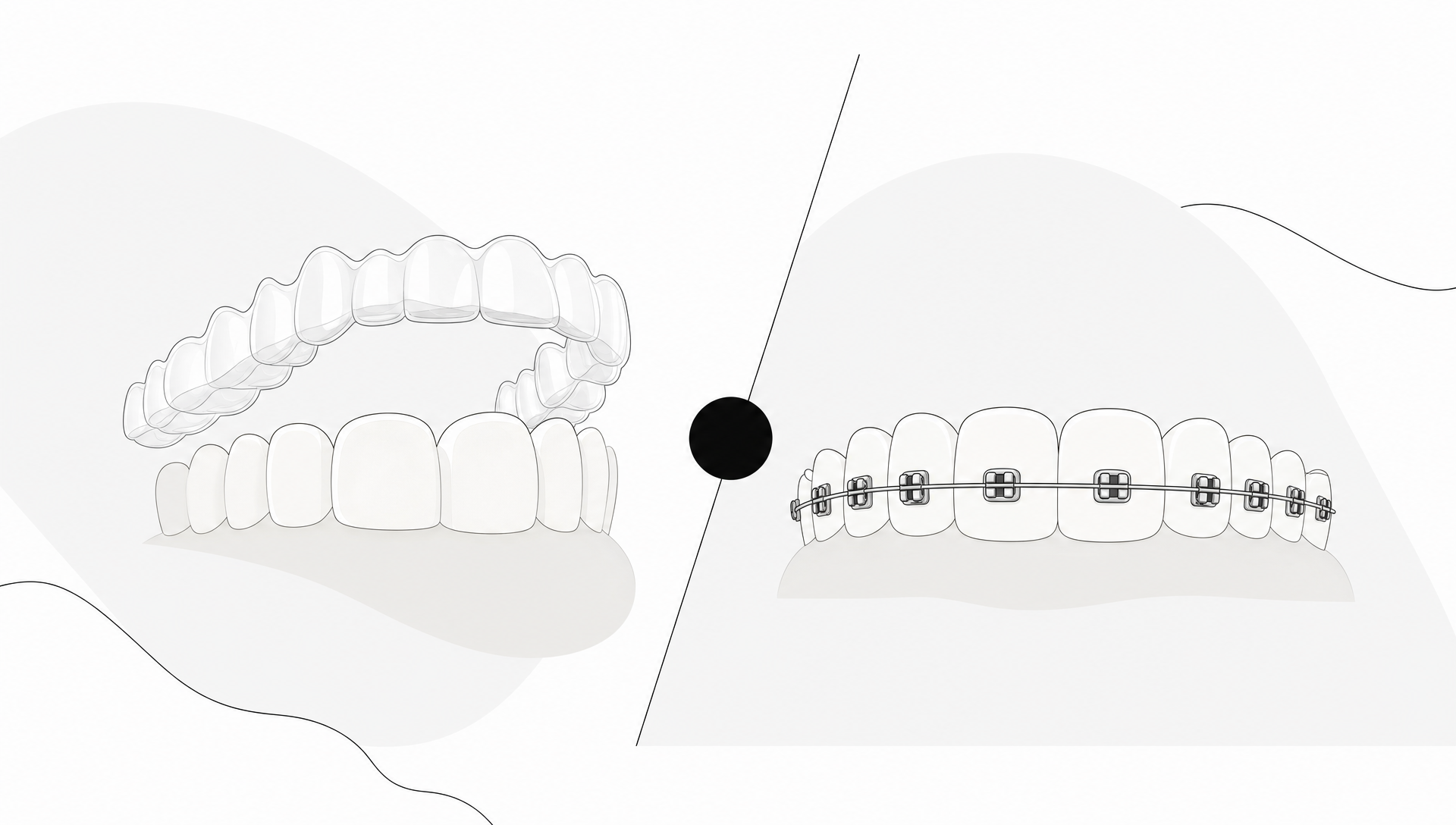
Choosing between Invisalign and braces is not just a cosmetic decision. Both can straighten teeth, improve bite alignment and make daily brushing easier, but they do it in different ways. The right option depends on your teeth, your bite, your age, your lifestyle and how consistently you can follow treatment instructions.
If you are comparing Invisalign vs braces for yourself or your teenager, the most useful starting point is this: clear aligners are removable and discreet, while braces are fixed and highly controlled. That difference affects everything from eating and cleaning to treatment discipline and suitability for more complex tooth movements.
For Melbourne patients, especially those working or studying in the CBD, convenience also matters. Regular appointments, easy access to your clinic and a treatment plan you can realistically maintain all play a role in getting a great result.
The short answer: Invisalign vs braces at a glance
Invisalign and braces can both be excellent orthodontic options. Neither is automatically “better” for everyone.
Invisalign may suit you if you want a discreet option, can wear aligners consistently and prefer being able to remove your appliance for meals, brushing and flossing. Braces may suit you if your case is more complex, you do not want to worry about remembering aligners, or your dentist recommends a fixed appliance for more predictable control.
| Factor | Invisalign clear aligners | Traditional braces |
|---|---|---|
| Appearance | Clear, subtle and removable | Visible brackets and wires |
| Removability | Removed for eating, drinking anything except water, brushing and flossing | Fixed to teeth throughout treatment |
| Eating | Fewer food restrictions because aligners come out | Some sticky, hard or chewy foods should be avoided |
| Cleaning | Brush and floss normally after removing aligners | Requires careful cleaning around brackets and wires |
| Discipline | Must be worn as directed, often 20 to 22 hours per day | Always working because they are fixed |
| Suitability | Often suitable for mild to moderate alignment issues, and some complex cases depending on assessment | Often suitable for a wide range of mild, moderate and complex cases |
| Comfort | Smooth plastic aligners, with pressure during tooth movement | Brackets and wires may rub or feel tight after adjustments |
| Visibility in professional settings | Very discreet | More noticeable, although ceramic options may be less visible |
This table is a guide only. Your teeth, jaw relationship, gum health and treatment goals need to be assessed before you can know which option is best.
How Invisalign works
Invisalign uses a series of custom-made clear aligners that gently move your teeth in planned stages. Each aligner is shaped slightly differently, applying controlled pressure to guide teeth towards their ideal positions.
You usually change aligners according to your dentist’s instructions. The aligners need to be worn consistently, typically most of the day and night, and removed only for eating, drinking anything other than water, brushing and flossing.
Because Invisalign aligners are clear, they are popular with adults and teens who want a more discreet way to straighten their smile. They can be especially appealing if you give presentations, attend client meetings, work in hospitality, study at university or simply prefer a less noticeable treatment.
Metro Dental is an Invisalign Platinum Provider, which means the clinic has experience providing Invisalign treatment. If you are looking for clear aligners in the city, speaking with a CBD-based dental team can help you understand whether Invisalign is suitable for your smile goals.
How braces work
Braces use brackets attached to the teeth and wires that apply gentle, continuous pressure. Over time, this pressure moves teeth into improved alignment. Braces may be metal or ceramic, depending on what is recommended and available for your case.
Because braces are fixed, they work all the time. You do not need to remember to put them back in after meals, which can make them a good option for patients who may struggle with aligner wear time.
Braces are also very versatile. They can be recommended for cases involving more significant crowding, spacing, rotations, bite problems or tooth movements that need precise control. That does not mean Invisalign cannot treat more complex cases, but fixed braces may still be the preferred option in some situations.
Which option is more comfortable?
Both Invisalign and braces involve some pressure. That pressure is a normal part of moving teeth, and it is often most noticeable when you start treatment, change aligners or have braces adjusted.
Invisalign aligners are made from smooth plastic, so they do not have brackets or wires that can rub against the cheeks. Some patients find this more comfortable day to day. However, aligners can still cause temporary tenderness, and attachments on the teeth may feel unusual at first.
Braces can cause rubbing or irritation, especially early in treatment. Orthodontic wax can often help with sore spots, and most patients adapt as their mouth gets used to the appliance.
Comfort is personal. Some people love the smooth feel of aligners, while others prefer the simplicity of fixed braces because they do not have to remove, clean and reinsert anything during the day.
Which is easier for eating and drinking?
Invisalign has a clear lifestyle advantage at mealtimes. You remove your aligners before eating, so you can usually continue enjoying most foods during treatment. You should brush before putting aligners back in, because trapping food or sugar against your teeth can increase the risk of decay.
With braces, you need to be more careful. Hard foods can damage brackets, sticky foods can pull at wires, and chewy foods can be difficult to clean away. You can still enjoy a varied diet, but you may need to cut foods into smaller pieces and avoid anything that could break the appliance.
If you snack frequently or drink coffee throughout the day, aligners require more planning. They should be removed for drinks other than water, and you need to keep track of total wear time. Braces do not come out, but cleaning after meals is more involved.
Oral hygiene: which is easier to keep clean?
For many patients, Invisalign is easier for brushing and flossing because the aligners are removable. You take them out, clean your teeth as usual and clean the aligners separately.
Braces require more detailed cleaning. Food and plaque can collect around brackets and under wires, so brushing technique becomes especially important. You may need tools such as interdental brushes, floss threaders or a water flosser to clean thoroughly.
Good oral hygiene matters with either treatment. Straightening teeth while plaque is left behind can lead to gum inflammation, enamel marks or cavities. Before starting orthodontic treatment, your dentist may recommend a general dentistry check-up and professional clean to make sure your teeth and gums are healthy.
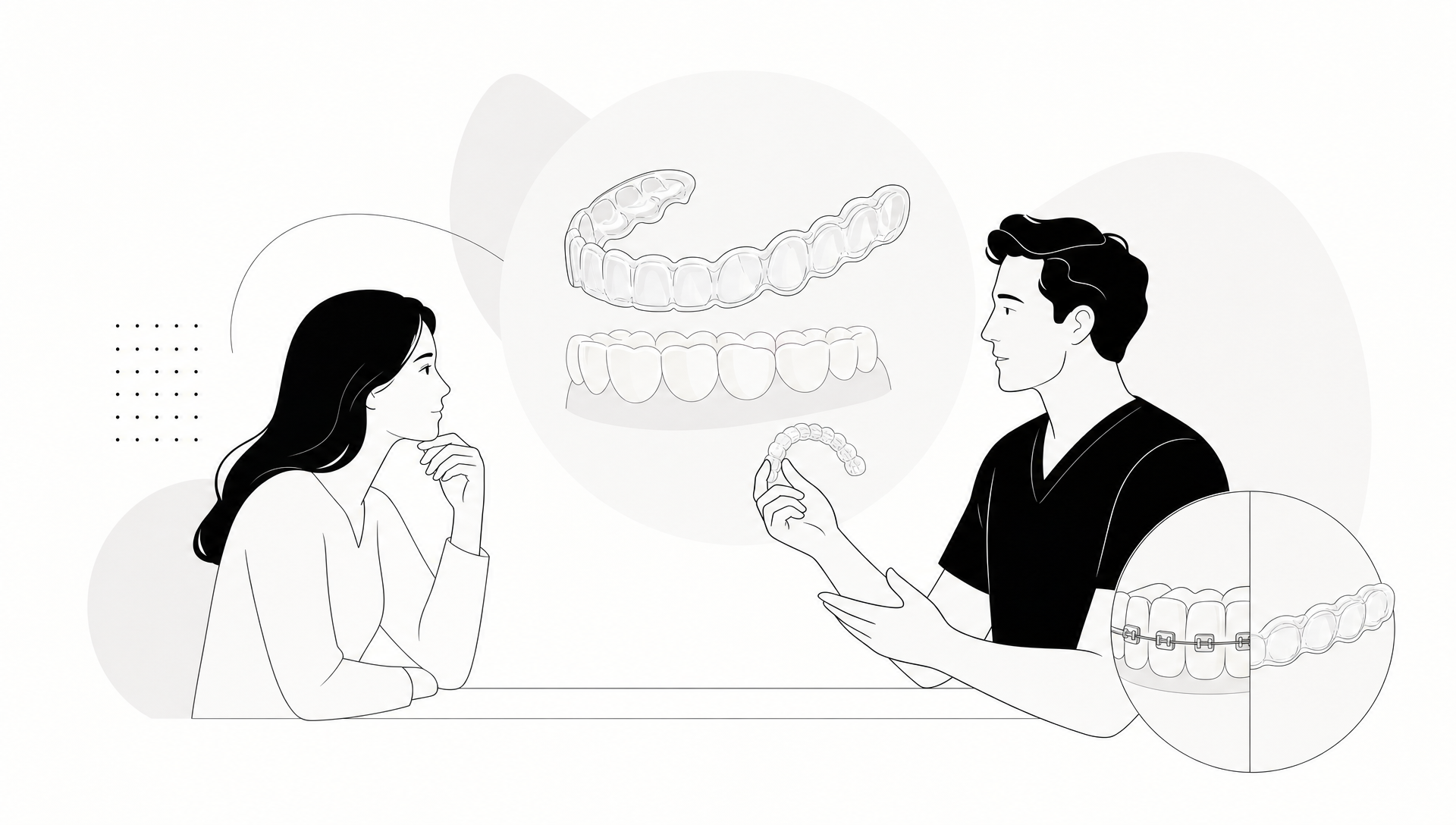
Does Invisalign work as well as braces?
In many cases, yes. Invisalign can be highly effective for suitable patients, especially when the treatment is planned carefully and the aligners are worn as instructed.
The key phrase is “suitable patients”. Some tooth movements are easier to achieve with fixed braces, while others can be managed well with clear aligners. Attachments, elastics and refinements can also help aligner treatment achieve more complex movements, but your dentist needs to assess whether this is appropriate.
Braces may be recommended if your case requires significant bite correction, complex rotations, severe crowding or movements that are better controlled with brackets and wires. Invisalign may be recommended if your alignment concerns are mild to moderate, your bite is suitable and you are motivated to wear aligners consistently.
A professional assessment is the only way to compare the options properly. Photos alone are not enough. Your dentist may need to assess your bite, tooth roots, gum health, jaw relationship and whether there is enough space to move teeth safely.
Treatment time: which is faster?
Treatment time varies widely. Some minor alignment cases can be completed relatively quickly, while more complex cases may take much longer. Invisalign is not always faster than braces, and braces are not always slower than Invisalign.
What affects treatment time most is the complexity of the movement needed, your biology, your oral health and how closely you follow instructions. With Invisalign, wearing aligners for the recommended number of hours each day is critical. If aligners are left out too often, treatment can slow down or teeth may not track as planned.
With braces, appointments and appliance care matter. Broken brackets or missed adjustment visits can delay progress.
The best question to ask is not “Which is fastest?” but “Which option is most predictable for my teeth and my routine?” A realistic treatment plan is usually better than chasing the shortest possible timeframe.
Cost and payment considerations
The cost of Invisalign vs braces depends on the complexity of your case, the length of treatment and the type of appliance recommended. A simple alignment case is usually different from a comprehensive bite correction case.
Because fees vary from patient to patient, it is important to get a personalised quote after an examination. Ask what is included in the treatment plan, such as consultations, scans or impressions, attachments, refinements, emergency visits and retainers after treatment.
Payment options can also make a difference. Metro Dental supports payment plans, which may help patients manage the cost of orthodontic or cosmetic dentistry treatment over time. If you are booking for a child, you can also ask about eligibility for bulk-billed children’s dentistry, noting that orthodontic and cosmetic treatments are usually assessed separately from general dental benefits.
Invisalign vs braces for adults
Adults often choose Invisalign because it is discreet and fits more easily into work and social settings. If you are based in the city, having appointments with a dentist on Swanston Street can also make treatment more convenient during lunch breaks or before and after work.
That said, braces can still be an excellent option for adults. Some adult patients prefer fixed treatment because they do not want the responsibility of aligner wear time. Others need the level of control that braces can provide.
Adult orthodontic treatment also needs to consider gum health, existing dental work and tooth wear. If you have crowns, veneers, missing teeth, gum recession or a history of grinding, your dentist will factor these into the plan.
Invisalign vs braces for teenagers
Teenagers can do well with either option, but the decision often comes down to maturity, compliance and the type of correction needed.
Invisalign can be a confidence-friendly option for teens who feel self-conscious about braces. However, aligners must be worn consistently and not lost at school, sport or social events. If a teenager is unlikely to wear aligners properly, braces may be more reliable.
Braces are fixed, which can make them a practical choice for younger patients or anyone who needs a more hands-off treatment approach. They also allow the dentist to maintain constant control over tooth movement.
Parents should ask about cleaning, diet, appointment frequency and what happens if an appliance is damaged or aligners are misplaced.
When Invisalign may be the better choice
Invisalign may be worth considering if you want a subtle treatment and can commit to wearing your aligners as instructed. It can be a strong option for busy adults, university students, professionals and image-conscious teens.
You may prefer Invisalign if:
- You want a discreet orthodontic option.
- You are comfortable removing aligners for meals and cleaning.
- You can reliably wear aligners most of the day and night.
- You want fewer food restrictions during treatment.
- Your dentist confirms that your bite and alignment concerns are suitable.
The most important factor is compliance. Invisalign only works while the aligners are in your mouth. If you regularly forget to wear them, the treatment may not progress as planned.
When braces may be the better choice
Braces may be recommended if your case is more complex or if you want a fixed option that does not rely on remembering to wear aligners.
You may prefer braces if:
- You want an appliance that is always working.
- Your dentist recommends fixed treatment for better control.
- You are likely to forget, lose or under-wear aligners.
- You are comfortable with a more visible appliance.
- You need correction that may be more predictable with brackets and wires.
Braces require careful cleaning and some food changes, but they remain one of the most reliable and widely used orthodontic treatments.
What to expect at an Invisalign or braces consultation
A consultation should help you understand your options clearly, not pressure you into one treatment. Your dentist will usually discuss your concerns, examine your teeth and gums, assess your bite and explain what kind of result may be achievable.
Depending on your case, records such as photos, scans or X-rays may be recommended. These help your dentist plan safe movement and identify issues that are not visible from the outside.
At Metro Dental in Melbourne CBD, patients can discuss general dentistry, cosmetic dentistry and orthodontic options in one clinic. That can be helpful if your smile plan involves more than straightening, such as whitening, bonding, veneers or restorative work after alignment.
Do you need whitening or veneers instead of Invisalign or braces?
Sometimes patients ask about Invisalign or braces because they want a better-looking smile, but the main concern may be colour, tooth shape or worn edges rather than alignment.
If your teeth are already straight but stained, teeth whitening may be more appropriate. If tooth shape, chips or uneven edges are the main issue, cosmetic dentistry such as bonding or veneers may be discussed. If teeth are crowded, spaced or affecting your bite, orthodontic treatment may be the better foundation.
In many smile makeovers, alignment comes first. Straightening teeth before whitening or veneers can allow for more conservative cosmetic treatment and a more balanced final result. Your dentist can help you sequence treatment safely.
Retainers: the step you should not skip
Whether you choose Invisalign or braces, retainers are essential after treatment. Teeth can shift over time, especially in the months after active orthodontic movement. Retainers help maintain your new smile.
Your dentist will explain how often to wear your retainers and when they need to be reviewed or replaced. Skipping retainers is one of the most common reasons orthodontic results relapse.
Think of retainers as smile maintenance. The active treatment moves your teeth, but retention helps protect the result you worked for.
Frequently asked questions
Is Invisalign more expensive than braces? Not always. Cost depends on your case complexity, treatment length and what is included in your plan. You need a personalised assessment and quote to compare Invisalign and braces accurately.
Can Invisalign fix an overbite or underbite? Invisalign can help with some bite concerns, but suitability depends on severity and the type of movement required. More complex bite corrections may need braces or another orthodontic approach.
Are braces better for complex teeth straightening? Braces can be especially useful for complex movements because they are fixed and allow precise control. However, some complex cases can still be treated with clear aligners after careful assessment.
Can I eat normally with Invisalign? Yes, because you remove the aligners before eating. You should brush before putting them back in to reduce the risk of decay and staining.
Do clear aligners hurt? Clear aligners can cause pressure or tenderness when teeth start moving or when you change to a new set. This usually settles, but you should contact your dentist if pain feels unusual or persistent.
Which option is best for a busy CBD lifestyle? Invisalign is discreet and flexible, while braces are fixed and do not require wear-time discipline. If you work or study in the city, choosing a conveniently located Melbourne dentist can make regular appointments easier.
Ready to compare your options?
If you are deciding between Invisalign and braces, the best next step is a personalised consultation. A dentist can assess your teeth, explain what each option could achieve and help you choose a treatment plan that fits your smile, lifestyle and budget.
Metro Dental offers patient-focused dental care in Melbourne CBD, including Invisalign, orthodontic care, general dentistry and cosmetic dentistry. If you are ready to explore your options, book an appointment with the team at Metro Dental on Swanston Street and take the first step towards a straighter, healthier smile.
Disclaimer
The information provided on this website is for general informational and educational purposes only. It is not intended to replace professional dental advice, diagnosis or treatment. Dental needs and treatment outcomes vary between individuals. Always seek advice from a qualified dental practitioner regarding your specific circumstances before making decisions about your oral health or treatment. A consultation and clinical assessment are required to determine which treatment options may be suitable for you. All dental procedures carry potential risks and benefits, which will be discussed with you before treatment.